
Creator affiliate marketing programs work best as an operating system, not just a directory: they connect creator recruitment and commission rules with campaign tracking, tax documentation and payouts. The platform helps brands organise these steps and gives creators a clearer view of how their activity translates into earnings.
It is easy to focus on the commission rate first. But a workable programme also depends on how creators are recruited, which actions earn commission, how sales are attributed and when approved earnings are paid.
This guide explains how creator affiliate platforms manage those moving parts in Singapore. You’ll learn what to look for in commission structures, recruitment workflows, tax forms, payout processes and campaign tracking, so you can assess how a programme operates from sign-up through measurement.
Key Takeaways
- Understand how an affiliate platform links creator activity to measurable conversions, rather than simply listing potential partners.
- Compare commission structures and recruitment approaches to build a programme that is clear for creators and manageable for brands.
- Learn how tax form collection and payout workflows fit into the creator payment process.
- Use campaign tracking to interpret performance over time and identify where a programme may need refinement.
What is an affiliate marketing platform?
An affiliate marketing platform connects brands, creators, audiences and sales data in one workflow. A creator shares a tracked product link, a customer completes a purchase, and the platform records the conversion. Brands can then see which creator or campaign activity generated attributed sales. Creator affiliate marketing programs use this structure to connect partnerships with measurable outcomes.
Tracking starts with a unique link, code or other campaign identifier for each creator. When someone clicks and buys, attribution rules determine which activity receives credit. Before launch, define the qualifying action, attribution window, and how cancellations or returns affect recorded conversions. Clear rules make performance easier to compare and results easier to explain to creators.
Creator affiliate programmes differ from influencer sponsorships and creator marketplaces. Sponsorships usually pay for agreed content or deliverables, while affiliate programmes reward qualifying actions such as sales. A marketplace helps brands discover creators; an affiliate programme adds processes for tracking referrals, commissions and campaign results.
For Singapore campaigns, make the commercial relationship clear beside affiliate links and sponsored content. Use direct wording, such as “I may earn a commission if you buy through this link,” rather than expecting audiences to infer the relationship. Keep disclosures visible in the content itself, including short-form videos, so audiences understand the creator’s connection to the brand.
The best programmes available in Singapore are those that fit the campaign’s needs: creator recruitment, commission rules, attribution, reporting and payout administration. Compare how each platform handles those steps, then match the workflow to your sales channel and creator mix. Short-form video can also support measurable action: video-based affiliate content drives 49 percent higher conversion rates, making trackable links or codes useful for assessing its contribution.
That preference also gives brands a reason to consider how affiliate activity is presented, not only how it is tracked. 63 percent of global social media users prefer short content. A platform can help teams connect short content to trackable links or codes and review attributed actions, while keeping disclosures clear and commission terms understandable to audiences and creators. The format and tracking should work together.
Commission structure and creator recruitment
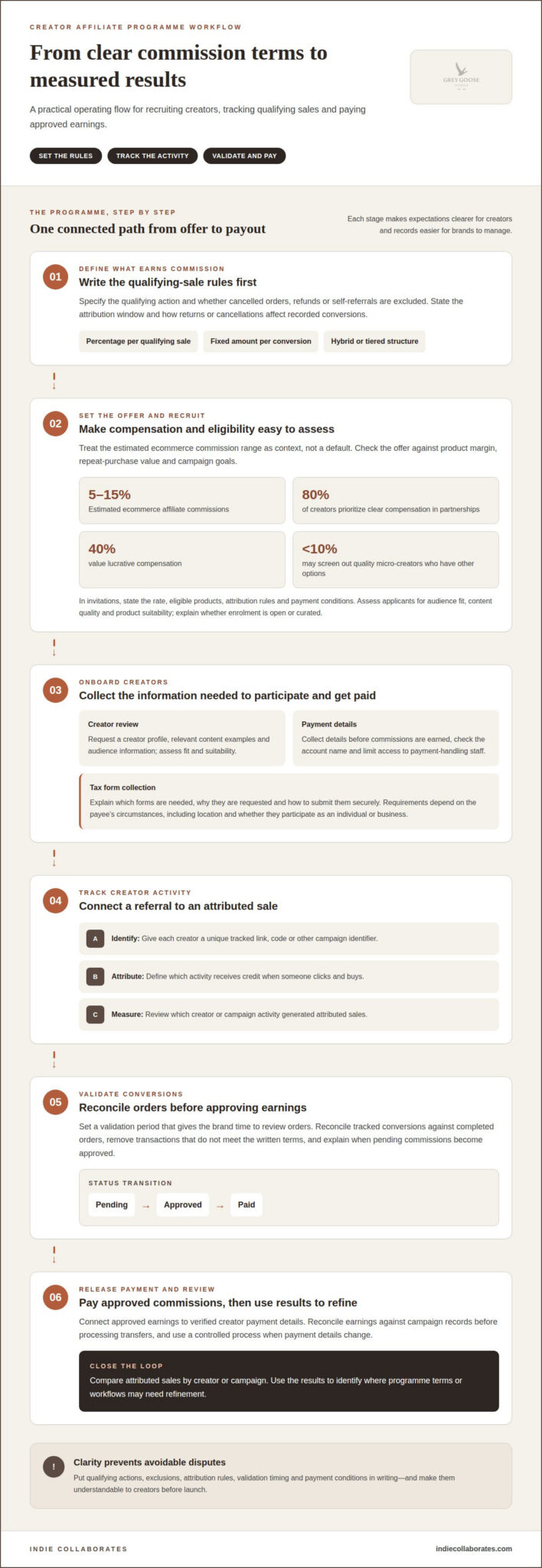
Set commissions only after defining what qualifies: a completed sale that meets the programme’s terms. State whether cancelled orders, refunds or self-referrals are excluded. Clear terms help creators understand which conversions count and help brands validate commissions consistently.
Affiliate commission models can include a percentage of each qualifying sale, a fixed amount per conversion, or a hybrid structure. Ecommerce affiliate commissions are estimated at 5-15%. Treat that range as context, not a default: product margins, repeat-purchase value, and campaign goals shape a suitable offer. A tiered structure can reward stronger performance while keeping the base terms easy to explain.
Recruitment depends on whether the commission makes sense for the creator’s effort and audience. Eighty percent of creators prioritize clear compensation in partnerships, while 40 percent value lucrative compensation. State the rate, eligible products, attribution rules, and payment conditions in the invitation. A commission below 10% may screen out quality micro-creators who have other options, so assess competitiveness alongside margin.
Make the application process straightforward. Request a creator profile, relevant content examples, audience information and payment details, then assess audience fit, content quality and suitability for the product. Open-enrolment programmes may accept individual creators, while curated programmes assess applicants before approval. Explain eligibility and submission steps on the application page.
Set a commission validation period that gives the brand time to review orders before approval. Reconcile tracked conversions against completed orders, then remove transactions that do not meet the written terms. Explain when commissions move from pending to approved and how returns or cancellations affect the total. A defined process helps prevent disputes while keeping creators informed.
Before recruiting, test the offer with a sample sale calculation using your product price and proposed commission rate. Check the resulting commission against product margin and campaign objectives, then revise the terms before invitations go out. A transparent offer helps creators decide whether the partnership suits their content and audience.
Automated payouts and tax form collection
Automated payouts connect approved commissions to creator payment details. A practical workflow has three stages: validate conversions, approve earnings and release payment. A dashboard can separate pending, approved and paid commissions, helping finance teams reconcile earnings against campaign records before processing transfers. Automation reduces repetitive administration, but clear approval controls and accurate payee information remain essential.
Collect payment details during onboarding, before a creator earns commissions. Ask each partner for the information required by the chosen payment method, then check that the account name and details match. Limit access to staff who handle payments. If a creator changes bank details, use a controlled update process rather than an informal message that could be missed or misread.
Include tax form collection in onboarding. Tell creators which forms the programme needs, why they are requested and how to submit them securely. Requirements depend on the payee’s circumstances, including location and whether they participate as an individual or business. For a Singapore programme with regional creators, a consistent intake process can collect the relevant declarations without assuming every partner has the same details.
Before each payout run, use a checklist: confirm the creator’s form status, match approved commissions to the ledger, flag incomplete payment details and record the payment outcome. Show a clear reason for any blocked payment, such as missing documentation or a mismatched account name. This gives operations teams a specific next step and helps creators understand what needs to be resolved.
Keep an audit trail for each payment. Record the commission period, approval date, amount, payment status and any adjustment, such as a reversed order. Give partners a statement explaining how the final payable total was calculated. These records help Singapore finance teams reconcile payments and answer creator queries. Review access permissions and retention practices as part of the payout workflow, before a discrepancy arises.
Affiliate campaign tracking and measurement
Build a campaign scorecard before launch and use the same definitions for every creator. Track attributed orders, conversion rate, revenue and cost per action. Separate creator-level results from campaign totals, so one strong partner does not conceal weaker performance. Give each creator a unique link or code, and label the campaign, content format and channel consistently. That structure makes comparisons useful rather than dependent on memory or inconsistent naming.
Allow time for results to emerge. First attribution typically appears 2-4 weeks from campaign launch. During that period, check whether links resolve correctly, orders appear in reports, and creator codes apply as intended. Investigate gaps between clicks and recorded conversions before changing commission terms. Otherwise, a tracking fault can look like weak content or audience fit.
Use week four in a typical creator affiliate program to identify top-performing creators. Compare conversion quality and revenue alongside order volume. A high click count without completed purchases may call for a different content angle or product recommendation. Share useful findings with creators, then refine briefs and campaign priorities based on the pattern.
Keep activity visible after launch. Programs that go quiet after launch see attribution drop off within 60 days after launch. Schedule regular reviews, communicate results, and give partners timely recommendations for improving content. PUMA’s cost per action decreased by up to 30 percent, illustrating why performance measurement can inform optimisation. Treat each change as a test, recording what changed and how results moved.
Close each review by documenting the decision, owner, and next measurement point. For example, if a creator’s video drives clicks but few orders, test a clearer product demonstration before changing the partnership. Strong campaign performance reporting turns tracking data into practical decisions for brands and creators.
Indie Collaborates: Influencer Marketing Campaigns
Indie Collaborates connects creator partnerships with campaign objectives through end-to-end Influencer Marketing Campaigns and Affiliate Programmes. These services suit brands looking for a structured approach to creator recruitment, campaign delivery and performance measurement, rather than managing each moving part in isolation.
When campaigns need creator-led assets, Scalable UGC Production supports content creation, while Creator Content Strategy helps define the role of that content. Each approach serves a different purpose: affiliate activity centres on tracked outcomes, while influencer campaigns and UGC can support broader content goals.
Ready to align creator activity with your campaign objectives? Contact Indie Collaborates to discuss your needs.
Build a stronger foundation for your next campaign
A well-designed creator affiliate marketing programme grows through deliberate decisions, not activity alone. Before your next launch, choose the business outcome that matters most and define what evidence will guide your next move. That focus keeps creator selection, campaign execution and evaluation connected.
In your next planning conversation, decide what should stay consistent and what you can test. For example, refine the audience, creative direction or conversion measure one at a time. A clear learning agenda gives teams and creator partners a shared purpose while leaving room for relevant recommendations and authentic content.
Indie Collaborates can help you turn that direction into a campaign approach. Start a conversation with Indie Collaborates about the objectives you want your next creator campaign to serve. A thoughtful next step can make future decisions clearer and help your programme develop with intent.
Frequently Asked Questions
What commission rates and payout thresholds do creator affiliate programs offer?
Commission rates and payout thresholds depend on each programme’s terms and payment setup. Before joining, check whether commission applies to product totals or another defined sale value, and whether the minimum payout applies to approved earnings only. A creator with pending transactions, for example, may need to wait until they are validated before reaching the payment threshold. Compare the full terms, not just the headline rate.
How do creator affiliate programs track sales and attribute commissions?
Platforms connect referrals to transactions using identifiers such as creator links or discount codes, then apply the programme’s attribution rules. If a customer uses one creator’s code after clicking another creator’s link, for example, the configured rules determine which referral receives credit. To investigate a mismatch, compare the order record, referral details, code use and attribution settings for that transaction.
What are common risks, restrictions, and reasons for losing affiliate commissions?
Commissions can be affected by programme restrictions, attribution conflicts and activity that breaches the terms. A creator may lose credit, for example, if a code is shared beyond its intended promotion or another referral replaces the original attribution. Misleading product claims or undisclosed commercial relationships can also create campaign and reputational risks. Review rules for permitted promotion methods, claims and code use before publishing.
Which affiliate programs in Singapore accept individual creators and influencers?
Open-enrolment programmes can accept individual creators. Curated programmes may assess applicants before approval.
