
A polished brand ad isn’t always the strongest performer. Creator content for paid advertising uses creator-made photos or clips in partnership with a brand, which the brand then promotes as paid ads. Creator-led branded content has recorded a 122% higher 2-second view-through rate, showing why the format deserves a place in a performance strategy.
Influencer marketing and creator ads can overlap, but they serve different roles: a creator’s post can build a relationship with their audience, while paid promotion gives a brand more control over how content reaches its target audience. Choosing the right approach starts with understanding that distinction and matching the creative to your campaign goal. This guide explains what creator ads are, how they differ from influencer marketing, and how to use video, photo and review-style formats. You’ll also learn which performance metrics to assess and how creator content can support testing, reach and conversions in Singapore.
Key Takeaways
- Separate creator partnerships from paid creator ads, then match each approach to the campaign goal and audience.
- Choose video, photo or review-style creative based on the message, and preserve the creator’s natural style.
- Assess performance with metrics tied to your objective, such as view-through rate, engagement, traffic or conversion costs.
- Before repurposing content in Singapore, define the usage period and paid-ad rights, including whether ads can run from the creator’s social handle.
Creator-led branded content performance statistics
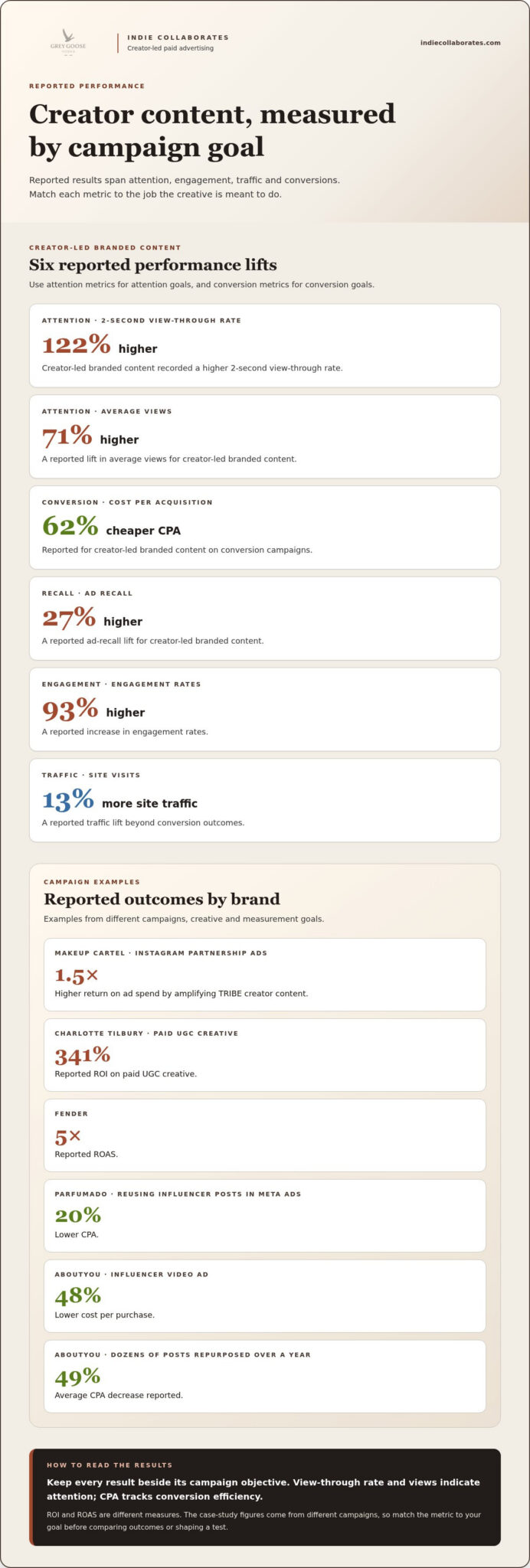
- Set the objective before choosing a metric. Creator-led branded content recorded a 122% higher 2-second view-through rate and 71% higher average views. On conversion campaigns, it had a 62% cheaper CPA. View-through rate and views indicate attention, while CPA tracks conversion efficiency. Keep each result beside its campaign objective to assess whether the creative is doing its intended job.
- Repurpose content that already connects. Consider promoting creator posts as brand-run paid social ads when they perform well organically. The creator’s delivery, setting and point of view can help the ad feel native. Preserve that authentic storytelling rather than rewriting every line as corporate copy. Creator-led branded content also recorded 27% higher ad recall, 93% higher engagement rates and 13% more site traffic, giving brands measures beyond conversions.
- Compare case studies by outcome. Makeup Cartel achieved 1.5 times higher return on ad spend by amplifying TRIBE creator content as Instagram Partnership Ads. Charlotte Tilbury achieved a 341% ROI on paid UGC creative, while Fender achieved 5X ROAS. These examples show several reported outcomes, but ROI and ROAS are different measures. Match the metric to your campaign goal before using a case study to guide creative decisions.
- Use reported results to shape your test. Parfumado reduced CPA by 20% by reusing influencer posts in Meta ads. AboutYou reported that its influencer video ad lowered cost per purchase by 48%, and repurposing dozens of posts over a year brought an average CPA decrease of 49%. Test creator assets against your existing control, then compare the same conversion metric across each version.
UGC video, photo, review-style and short-form ad formats
Choose a format based on your message, platform and campaign objective, then adapt its dimensions and call to action to the placement.
-
Identify Creator Content Formats
Match the asset to the story: use short-form video for a quick demonstration, photos for a clear product view, and review-style content to share a creator’s personal experience. Creator marketing can include organic influencer posts, commissioned UGC or content made through a brand partnership. Keep the delivery natural, and avoid polishing away the details that make it feel authentic.
For video, test 6-, 15-, 22- or 30-second edits. A short-form UGC clip can run 15 to 30 seconds, with a hook in the first 3 seconds. For a 60-second in-feed video, use a hook, product demo or use case, then a CTA. Make the desired action clear, such as visiting a product page.
-
Select Platform-Specific Ad Formats
Next, adapt the asset to the platform and placement rather than resizing one file everywhere. Use a 9:16 aspect ratio for vertical Reels and Stories, and consider 4:5 or 1:1 for feed creative. A 16:9 aspect ratio suits YouTube video ads. Check that captions, product details and the CTA remain visible in each crop.
Choose the ad format to suit the partnership and targeting plan. Meta Partnership Ads can amplify creator content, while TikTok Spark Ads can promote creator posts. For feed images, 1080×1080 pixels is one example dimension. Keep the opening frame legible and make the next action obvious. For structured creator format planning, align each variation with its platform placement before launch.
Benefits of creator content in paid advertising
Creator ads can feel more personal than traditional ads, while brand-produced ads offer tighter control over presentation. Give creators a clear objective and boundaries, then let their own voice carry the message.
- Use creator perspectives to make the message relatable. Influencer content can show how a product fits into an everyday routine, rather than presenting only polished brand claims. This can help audiences understand the product in context. One industry-reported finding says 94% of shoppers visit a retailer after seeing creator content. Treat that as a reason to build a clear path from the ad to relevant product information.
- Match the format to the audience and platform. A creator’s review can answer product questions, while a demonstration shows how something works. On TikTok, a direct opening and visible use case can make the content easier to follow. Keep the key message consistent while giving the creator room to express it naturally. This balance can support engagement without making every post feel scripted.
- Brief for direction, not a word-for-word performance. State the audience, campaign goal, required product details, key message and desired action. Provide factual claims creators can use, along with topics or wording to avoid. Leave room for their own examples and delivery. A focused brief gives creators structure while preserving the authenticity that distinguishes their work from a traditional ad.
- Measure success against the campaign strategy. Choose metrics before launch: use click-throughs or retailer visits to assess traffic, and conversion data to evaluate sales outcomes. A Portent study found YouTube influencer referrals converted 6.8 times more often than referrals from other channels. That comparison is a useful prompt to examine channel performance, not a forecast for every campaign. Compare creator ads with your existing control using the same audience and measurement window.
How do brands license creator content for paid advertising in Singapore?
Before launching creator content as an ad, put permission, platforms, placements and the usage period in writing. Define each right clearly.
- Get explicit written permission for paid use. Before repurposing a creator’s post in paid ads, obtain written permission. Specify whether the brand can run sponsored ads under its own account. Permission to advertise directly from the creator’s social handle is separate, so state that right independently. If the agreed scope covers every campaign asset, request usage rights for all content produced.
- Choose rights that match the planned placement. Paid social rights allow creator content in sponsored ads under the brand’s account. Paid amplification rights cover boosting content across Meta platforms and TikTok to reach a targeted audience. Organic plus paid social rights combine organic reposting, paid social and amplification through Meta Partnership Ads and TikTok Spark Ads. Name the platforms and ad formats in the agreement.
- Set the usage period and channels. Creator-content rights are commonly negotiated for a defined period, such as three or six months. A contract can also set six months or one year as the usage term. Full digital usage rights include the listed social rights and allow use in formats such as banner ads and email marketing. Match the term to your campaign plan.
- Document broader and custom permissions. Full digital rights with out-of-home and point-of-sale rights can extend use to bus shelter posters, mall signage and digital ads on airport kiosks. If standard options do not fit, specify custom terms under “Other,” including the content, media, territory and duration. Clear wording helps both parties understand where the creator’s work may appear.
Need a structured approach to creator permissions and campaign scope? Explore creator content strategy for planning rights alongside creative use.
Indie Collaborates: Influencer Marketing Campaigns
Indie Collaborates helps brands turn creator-led ad plans into coordinated campaigns. Influencer Marketing Campaign Management supports creator partnerships, while Scalable UGC Production develops creator-made assets for paid advertising. Creator Content Strategy can align formats and messaging with campaign objectives, and Campaign Performance Reporting helps assess results against selected metrics.
Use these services when you need support connecting campaign goals with creator selection, content production or performance review. For example, a brand testing review-style ads can plan the creative approach, produce content and evaluate results as connected steps. This keeps creative decisions tied to the campaign’s intended outcome.
To discuss creator content for your paid campaigns, contact Indie Collaborates or visit indiecollaborates.com.
Make your next campaign a learning loop
Turn creative decisions into a repeatable process: give each asset a clear role, connect it to a campaign objective, then use performance data to guide what you produce next. This makes creator content for paid advertising more than a one-off execution. It becomes a practical way to learn about your audience and sharpen future briefs.
Indie Collaborates supports this process through Influencer Marketing Campaign Management, Scalable UGC Production and Affiliate Programmes. Whether you are planning a first test or developing a broader creator strategy, align the campaign scope with what you need to learn and achieve.
Contact Indie Collaborates to plan creator ads and take the next step with clarity and purpose.
Frequently Asked Questions
What are Creator Ads?
Creator ads are paid placements built from creator-made content, either posted from a creator’s account or adapted for a brand’s account. For example, a skincare creator might demonstrate a routine in a Partnership Ad, while the brand targets it to a selected audience. The creator supplies the voice and perspective; the advertiser controls campaign delivery and evaluates results against the campaign objective.
What is creator content for paid advertising?
Creator content for paid advertising is photo or video made by a creator in partnership with a brand and promoted as paid media. It can include original assets produced specifically for an ad or creator posts repurposed for promotion. For example, a home cook’s product-use clip can become an ad directing viewers to a relevant product page, with the creative and targeting aligned to the campaign goal.
What types of creator content work best in paid ads?
Short-form demonstrations, creator testimonials, unboxing clips, product photos and review-style stories can all work, depending on what the audience needs to understand. A new product may benefit from a simple demonstration; a familiar product may call for a creator’s comparison or personal use case. Choose the format that addresses the audience’s main hesitation, then make the opening, product detail and next action easy to follow.
How much does creator content for paid advertising cost in Singapore?
In Singapore, the price depends on the case and is given after a quote request. It can vary with creator selection, content volume, production requirements, campaign management and usage rights, including platforms and duration. Separate creator compensation and paid-media spend in your planning, since they serve different purposes. Define the deliverables and rights scope first so the quote reflects the intended campaign.
What metrics measure creator ad performance?
Measure creator ads using metrics tied to the campaign goal. For awareness, review reach, video views, view-through rate and ad recall; for engagement, assess interactions and engagement rate. For traffic, track clicks and site visits. For sales objectives, compare conversions, CPA and ROAS. Use the same attribution window and audience definitions across creative variants so comparisons reflect meaningful differences, not inconsistent measurement.
