
What if your influencer campaign report could answer more than “How many likes did we get?” A folder of screenshots and platform metrics may show activity, but it won’t explain what moved the campaign forward. Effective influencer campaign reporting connects each result to a clear objective, a reliable evidence source and a decision your team can act on.
Reporting can feel messy when creators and platforms provide different levels of detail, and sales are influenced by factors beyond a campaign. Without a consistent structure, it’s difficult to compare performance, assess contribution or decide what to change next.
This guide shows you how to choose metrics that fit your campaign goals, present findings in a concise and credible format, and interpret results carefully. You’ll also learn how to turn creator-level insights into practical decisions about selection, content and future measurement. The aim is a report that does more than document what happened. It helps shape what happens next.
Key Takeaways
- Match each campaign objective to a primary KPI, then use supporting metrics to understand what influenced the result.
- Make influencer campaign reporting easier to trust by recording consistent details for every creator, post, link and reporting date.
- Organise findings so stakeholders can see campaign-level outcomes alongside comparable creator-level performance.
- Separate observed results from conclusions about sales contribution, especially when other factors may have influenced purchases.
- Turn insights into a focused next step: decide what to repeat, change or investigate, and assign an owner and review date.
What Is Influencer Campaign Reporting, and Why Do Vanity Metrics Fall Short?
A post can attract thousands of views and still leave a brand unsure what to do next. Influencer campaign reporting turns creator activity and performance evidence into decisions tied to campaign goals. It helps teams move beyond recording what happened to understand what the results suggest and what to do next. For context, Influencer marketing uses creators to communicate with audiences, but the right measure of success depends on what a campaign is designed to achieve.
Every conclusion needs context. It depends on the campaign objective, the data available and how reliably activity can be connected to outcomes such as sales. Reporting can clarify the evidence, but it can’t prove that a creator caused every observed result.
How Is Campaign Reporting Different From Influencer Tracking?
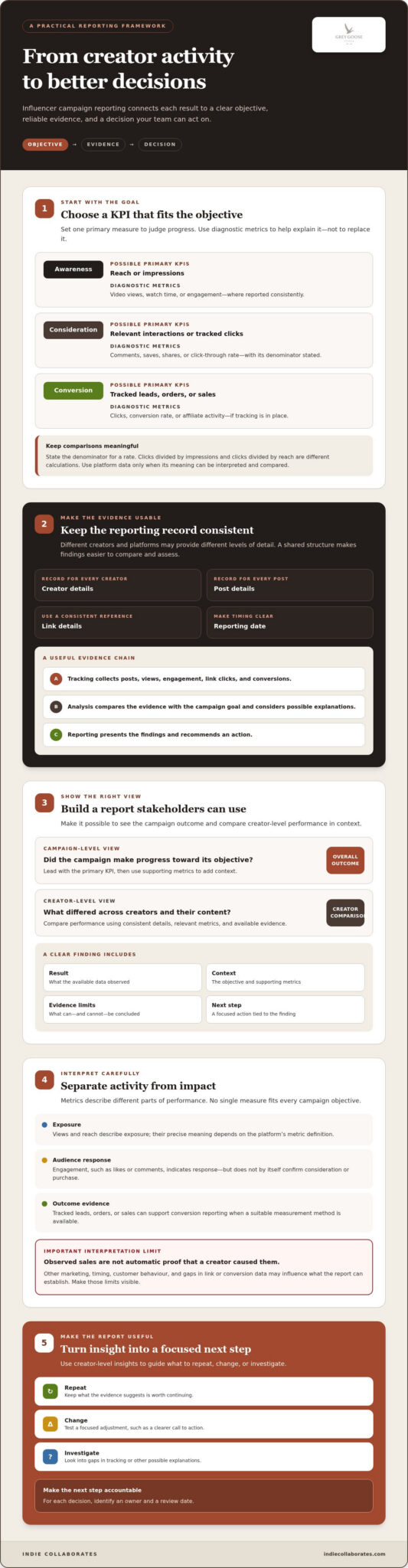
Tracking collects the data; analysis interprets it; reporting connects that interpretation to a decision. Tracking might record each creator’s posts, views, engagement, link clicks and conversions. Analysis compares those figures with the campaign goal and considers what may explain them. Reporting presents the findings and recommends an action.
For example, a creator’s link may receive fewer clicks than others. Tracking records the count; analysis compares it with the creator’s reach, content and other available evidence. The report might recommend testing a clearer call to action instead of simply labelling the result “low-performing.”
Why Do Vanity Metrics Need Context?
Views and reach describe exposure, though the precise meaning depends on the platform’s metric definition. Engagement, such as likes or comments, indicates audience response. Neither measure alone confirms that people considered a product or made a purchase.
A post with strong engagement may spark conversation but generate few tracked sales. That could reflect the campaign’s awareness objective, the audience’s stage in the buying journey or gaps in link and conversion data. Treating engagement as proof of sales impact would overstate what the evidence supports.
There’s no universal winning metric. A campaign focused on awareness needs measures related to exposure; a campaign aimed at consideration may look to interaction or traffic; a conversion-focused campaign needs suitable outcome data. Even then, attribution has limits: other marketing, timing and customer behaviour may also affect results. Strong influencer campaign reporting makes those limits visible, so stakeholders can distinguish observed performance from interpretation and use both to plan the next measurement approach.
How to Choose Influencer Campaign KPIs That Match Your Objectives
Start with the outcome the campaign is meant to support, then choose a primary KPI that can reasonably show progress towards it. Use diagnostic metrics to explain the primary result, not replace it. This keeps influencer campaign reporting focused on decisions rather than a long list of numbers. For broader guidance on planning and return on investment, see this performance-based influencer marketing framework.
| Campaign objective | Possible primary KPIs | Diagnostic metrics |
|---|---|---|
| Awareness | Reach or impressions, when reliable platform data is available | Video views, watch time or engagement, where reported consistently |
| Consideration | Relevant interactions or tracked clicks | Comments, saves, shares or click-through rate, with its denominator stated |
| Conversion | Tracked leads, orders or sales, where measurement supports them | Clicks, conversion rate or affiliate activity, if tracking is in place |
The primary KPI is the measure used to judge progress against the objective. Diagnostic metrics help explain that result. For example, if consideration is the goal, a team might use link clicks as its primary measure and interactions as context. A clicks-to-impressions rate means clicks divided by impressions; clicks divided by reach is a different calculation. State the denominator so comparisons remain meaningful. A guide to social media KPIs can provide additional context for selecting and tracking measures.
Which Metrics Fit Awareness, Engagement, and Conversion Goals?
Reach and impressions can indicate exposure, but use them only when the platform provides data you can interpret and compare. For an engagement objective, define which interactions count and whether the rate is calculated against reach, impressions or another base. For conversion, track clicks, leads or sales only when a suitable measurement method is available. A high engagement count alone doesn’t establish sales impact.
No KPI works for every objective. A metric becomes useful when it answers a specific campaign question and its limitations are understood.
How Should Teams Define KPIs Before a Campaign Starts?
Agree on the measurement plan before content goes live. Record the objective, KPI definition and calculation, data source, accountable owner and reporting window. Confirm creator deliverables and measurement links in advance, so posts can be matched to the right evidence. If platform data is unavailable or inconsistent, flag the gap rather than filling it with assumptions.
This preparation makes later comparisons more credible and helps teams decide what to adjust. If you’re planning reporting as part of managed campaign execution, explore campaign performance reporting from Indie Collaborates.
How to Collect and Reconcile Influencer Campaign Data
Reliable influencer campaign reporting starts before results are due. Set up a consistent record for each creator, post and link, then capture the source and date for every figure. This makes it easier to compare evidence across platforms and identify gaps without treating estimates as confirmed outcomes. McKinsey’s overview of influencer marketing offers broader context on the creator activity these records help assess.
What Campaign Data Should Be Recorded for Every Creator?
For each creator, log an identifier, agreed deliverables and any relevant cost. For every post, record its format, publication date and live content link. Add available reach, engagement, clicks and conversions, noting the source and reporting date. If you’re also assessing a creator-produced asset for other uses, the scalable UGC production guide provides related context.
Use this workflow to build a dependable dataset:
- Log deliverables: List each creator’s agreed content and planned publication date.
- Capture source data: Save platform analytics and link or commerce data when available, along with the date range and capture date.
- Validate: Check that every expected post is included and figures use the agreed definitions and reporting window.
- Consolidate: Bring records into a consistent view, preserving creator, post and link identifiers.
- Annotate: Note missing data, changes to dates, tracking issues and assumptions that affect interpretation.
How Can Marketers Check Tracking Quality and Attribution Limits?
Where tracking is in place, tagged URLs with UTM parameters can help identify traffic associated with a campaign or creator. Compare those results with platform analytics and commerce records where applicable, but don’t assume the sources will match: they may count different actions or cover different date ranges. Check for duplicate events, missing posts and inconsistent metric definitions before combining the data.
Attribution can be incomplete. A tracked sale shows an observed event linked to the available tracking setup; it doesn’t necessarily establish that creator content alone caused the purchase. Keep directly observed results separate from inferred contribution, and label estimates and assumptions clearly. If affiliate tracking and payout reporting are relevant, record the applicable source data and status instead of assuming every campaign uses identical tracking.
This source-aware process helps teams produce clearer campaign performance reporting. For managed campaign execution and reporting, explore Indie Collaborates’ campaign services.
How to Build an Influencer Campaign Report Stakeholders Can Use
A useful report gives readers a clear path from campaign purpose to the next decision. Open with the objective and reporting period, then summarise the outcome, key caveats and action required. Follow with delivery details, results and interpretation. Keep evidence and conclusions distinct: a number shows what was recorded, analysis explains what it may mean, and a recommendation states what to do next.
What Should an Influencer Campaign Report Include?
Start with the campaign objective, participating creators, agreed deliverables, live content links, reporting period and selected KPIs. Show campaign-level totals first, then comparable creator- and content-level detail where the data permits. A compact table helps readers assess each finding alongside its context:
| Metric | Result | Source | Context | Caveat |
|---|---|---|---|---|
| Tracked clicks | Recorded total | Tagged link data | By creator and post | Only links using the agreed tracking setup are included |
Use the same definitions and reporting windows across creator rows, or explain differences clearly. Beneath the table, separate observed results from interpretation and recommendations. For example, a post may have fewer tracked clicks than others. The interpretation might identify its call to action or audience response as areas to review, while the recommendation could be to test a different message. Keep supporting screenshots, detailed exports and methodology in an appendix or linked evidence, so the main report stays concise and auditable.
How Should Reports Change for Different Stakeholders?
Keep the evidence consistent, but adjust the emphasis to each reader’s decisions. Senior stakeholders usually need the objective, headline outcomes, important limitations and the decision required. Campaign teams benefit from creator-level comparisons, delivery status and observations about content. Finance or commerce teams need clearly sourced cost and conversion information when available, with attribution limits made explicit.
This layered format lets readers scan the summary or investigate details without confusing campaign totals with individual creator results. Don’t bury an important caveat in an appendix if it changes how a headline figure should be understood.
For reporting that connects creator activity with sales and supports practical campaign decisions, explore Indie Collaborates’ campaign performance reporting.
Turn Reporting Into Better Creator Campaign Decisions
A report earns its value when it informs the next brief, creator mix or measurement plan. Turn each finding into a focused test, connecting the recommendation to an observation and its evidence source. For example, if creator posts with product demonstrations received more saves than posts focused on product features, test that format with a comparable creator group. Treat the pattern as a useful signal, not proof that the format will perform the same way every time.
How Can Teams Turn Campaign Findings Into Next Steps?
Choose a small number of practical actions to test. A broad list of possibilities can dilute attention; a clear hypothesis gives the team something specific to learn. If findings point to creative choices, a creator content strategy framework can help shape future content.
For each action, record what to repeat, change or investigate, along with an owner and review date. Include the evidence behind it, the change being tested and the result that would inform the next decision. Compare like with like where possible: creators, deliverables, audiences, objectives and measurement methods should be sufficiently comparable to support a useful assessment. If they differ, explain how those differences may affect the conclusion.
When Does Managed Campaign Reporting Make Sense?
Consider whether your team can consistently coordinate creators, gather tracking data, analyse results and turn them into clear recommendations. When those steps are spread across people or campaigns, methods and definitions can drift. A managed partner may be useful when you need campaign strategy, execution and performance reporting to work together while keeping the evidence and its limitations visible.
Before choosing support, assess what your team needs: consistent creator-level analysis, reporting tied to available sales data, or a process that carries learning into future campaigns. Clarify which data sources will be used, how attribution limits will be presented and how recommendations will inform the next brief. Managed reporting should support better-informed decisions, not promise a particular result.
With a consistent learning loop, influencer campaign reporting becomes a way to refine creator selection, messaging, formats and measurement over time. To explore support that connects campaign strategy with performance reporting, explore performance-led campaign support.
Make Your Next Campaign More Informed
Strong influencer campaign reporting does more than catalogue views, likes and clicks. It connects campaign objectives to relevant measures, explains where the evidence comes from and turns findings into practical next steps. A clear report also separates observed results from interpretation, so teams can make decisions while recognising attribution limits.
Keep the learning loop focused: choose KPIs before launch, collect creator and content data consistently, and make recommendations that can be tested. Compare results carefully, noting when objectives, audiences, deliverables or tracking differ. Those distinctions help you refine creator selection, creative choices and measurement for future campaigns.
Indie Collaborates’ influencer campaign management includes comprehensive performance reporting designed to connect creator activity with sales while making measurement context clear. If you want structured support across campaign execution and reporting, explore performance-led influencer campaign management.
With a thoughtful approach, each report can become more than a record of past activity. It can help your team make clearer, better-informed decisions for the next campaign.
Frequently Asked Questions
What is influencer campaign reporting?
Influencer campaign reporting organises and interprets creator activity and performance data against campaign objectives. It explains what was delivered, which results were observed, where the evidence came from and what the team could do next. Tracking collects information; reporting adds context and recommendations. The right measures depend on the campaign goal, available data and how reliably outcomes such as sales can be attributed.
Which metrics are most important for influencer campaign reporting?
The most important metrics are those that match the campaign objective. Awareness campaigns may focus on reach or impressions; engagement campaigns can examine relevant interactions; conversion campaigns may track clicks, leads or sales when measurement is in place. Supporting metrics can help explain the primary result, but define calculations consistently, including the denominator for rates. No single metric proves success across every goal, so interpret figures in context.
How do you track an influencer campaign?
Start by recording each creator, agreed deliverables, publication dates and live content links. Before launch, decide which objective-related metrics to collect and identify their sources. Use tagged links or platform data when suitable, then consolidate results for a defined reporting period. Check for missing posts, inconsistent metric definitions and date-range differences. Document assumptions, and distinguish directly observed outcomes from attributed estimates when sharing findings.
Can influencer campaign reporting prove that creators caused sales?
Not always. A tracked click or attributed purchase can provide useful evidence, but it doesn’t automatically show that creator content alone caused the sale. Other marketing activity, timing and customer behaviour may also contribute. State the attribution method, data source and limitations in the report. Present directly observed results separately from estimates or interpretations, so stakeholders can understand what the tracking confirms and where conclusions remain uncertain.
Can you use a spreadsheet to report influencer campaigns?
Yes. A spreadsheet can work when the campaign’s scope is manageable and the team records creator, content, metric, source and date fields consistently. As campaigns, platforms and reporting needs grow, maintaining the information may become harder. Whatever tool you use, define KPIs in advance, validate entries, preserve links to source evidence and make recommendations traceable to the data. The quality of the process matters more than the format alone.
How often should influencer campaign performance be reported?
Set reporting timing around the campaign objective, content schedule and time needed for meaningful data to accumulate. Teams may monitor delivery while content is live, then prepare a final report after the agreed measurement window. State the date range in every update. Avoid comparing early results with more mature results without explaining the difference, since the figures may reflect different exposure periods or levels of available data.
