
Could a focused job board bring your brand closer to relevant marketing talent than another broad listing? A Marketing roles job board for brands can help narrow the search when creative or creator experience matters. Broad platforms place your opening alongside roles with very different requirements, so the challenge is finding the right fit, not simply attracting more applications.
If your team is hiring, distinguish a paid role from a one-off creator campaign. Both can support your marketing goals, but they need different briefs and working relationships. This article explains what specialist marketing job boards are designed for, how they compare with general platforms, and what to consider when choosing a route to candidates.
Indie Collaborates’ jobs board is part of the paid IC Inner Circle community, which includes more than 1,600 vetted creators. It is designed for brands, agencies, and HR teams posting paid creator and marketing roles. The sections below explain when this focused audience fits your hiring need and how the board can complement broader recruitment channels.
Key Takeaways
- A specialist board prioritises role relevance and audience fit, while a general platform can offer broader reach.
- Use a Marketing roles job board for brands when the opening calls for creative or creator experience.
- Separate paid employment opportunities from one-off UGC or influencer campaign briefs so applicants understand what you are offering.
- Make your listing clearer by defining the role title, responsibilities, essential skills, work context, and application instructions.
- Indie Collaborates’ jobs board supports brands, agencies, and HR teams hiring for paid creator and marketing roles within a community of more than 1,600 vetted creators.
Why brands use a specialist marketing roles job board
A specialist board makes a hiring search more intentional. A specialist marketing jobs board is a focused listing space for paid roles in marketing and related creative work, designed to connect employers with an audience aligned with those needs. A broad site gathers openings across many functions; a specialist board centres the hiring context, making role relevance as important as the number of listings.
Marketing spans different activities, audiences, and approaches. The What is Marketing? overview outlines the breadth of the discipline. In practice, one brand may need someone with creator experience, while another needs a marketer with broader strengths. A focused channel can put a relevant opportunity in front of people familiar with creative and creator work, without assuming every marketing hire needs that background.
Which hiring needs suit a specialist board?
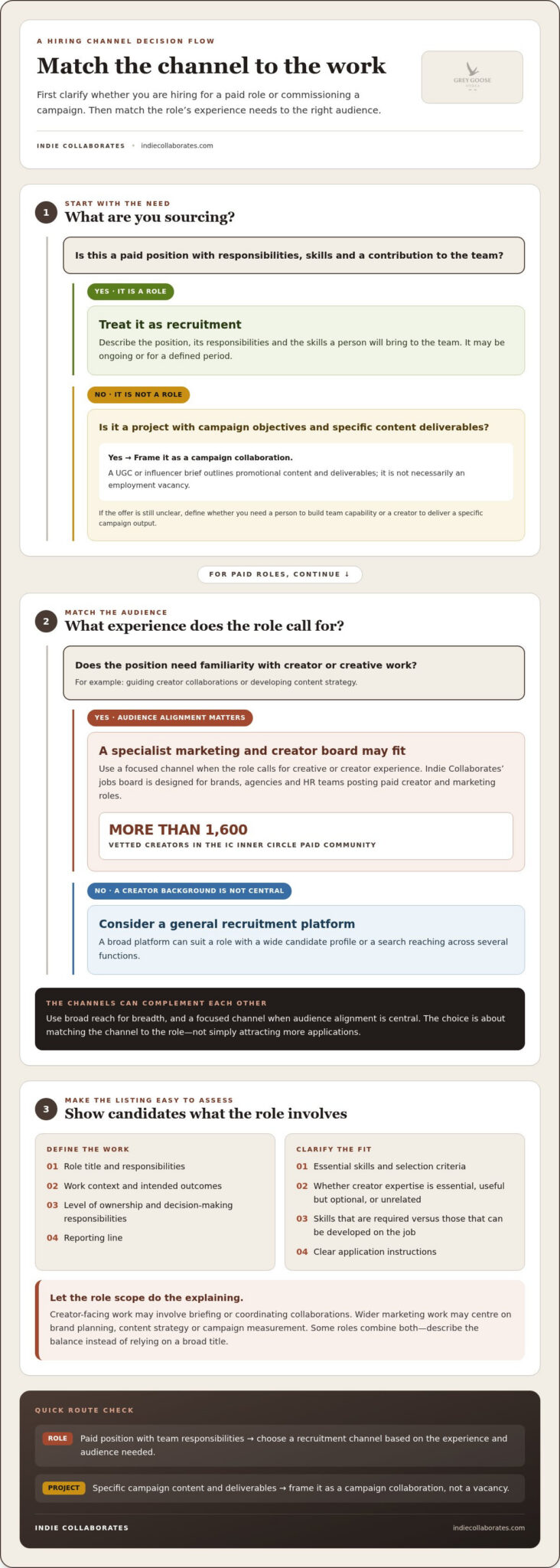
Indie Collaborates’ board supports paid creator and marketing roles and is designed for brands, agencies, and HR teams. It suits employers hiring for creator-related work or a marketing position where creative context matters. For example, a role might involve guiding creator collaborations or developing content strategy. These are hiring needs, not campaign briefs.
That distinction matters. Recruiting means defining a paid role, its responsibilities, and the skills a person will bring to the team, whether the position is ongoing or for a set period. Commissioning UGC or influencer campaign content is a project-based collaboration with deliverables, rather than necessarily a vacancy. If your goal is to build a team capability, write a role listing. If you need a specific campaign output, frame it as a campaign collaboration instead. The evolving creator economy agency landscape also reflects the distinct relationships and ways of working involved in creator work.
When does a broad job site remain useful?
A general platform can be a strong fit when the role has a wide candidate profile or you want to reach people across several functions. A specialist board is more relevant when the position calls for familiarity with creator or creative work. The options can complement each other: use broad reach for breadth, and a focused channel when audience alignment is central.
For brands, the choice is not simply between more listings and fewer. It is about matching the channel to the role. Indie Collaborates’ jobs board sits within its IC Inner Circle paid community, which includes more than 1,600 vetted creators. It gives employers a focused route for posting paid creator and marketing roles, while broader recruitment channels can serve other hiring needs.
Which marketing and creator roles belong on a specialist job board?
A specialist board can support both paid creator roles and broader marketing positions. Describe the work accurately, then match the channel to the experience the role calls for. A creator-facing position might involve shaping briefs or coordinating creator collaborations. A wider marketing role could focus on brand planning, content strategy, or campaign measurement. These are examples of role scope, not a requirement that every marketing hire has creator-specific experience.
For a Marketing roles job board for brands, clarity about the role helps candidates judge whether their strengths fit. State whether creator expertise is essential, useful but optional, or unrelated. Then explain the level of ownership, essential skills, intended outcomes, and reporting line. A focused audience is most useful when the listing makes clear why the role belongs in that context.
How to distinguish creator jobs from creator campaigns
Hiring fills a role; commissioning content briefs a project. A job describes responsibilities, selection criteria, and a person’s contribution to a team over an ongoing or defined period. A UGC or influencer campaign brief instead outlines promotional content, deliverables, and campaign objectives. It may involve a creator without creating an employment relationship. For campaign-related sourcing, the guide to hiring content creators explores a separate route from recruiting for a paid position.
This distinction helps prevent mismatched responses. If your organisation needs someone to build creator work into a marketing function, describe the position and its responsibilities. If it needs specific assets or a promotional collaboration, make the project brief the focus. The work may sit in the same creative ecosystem, but the commitment, deliverables, and selection criteria differ.
How role scope helps determine board fit
Creator-facing responsibilities may call for relationship coordination, briefing, or an understanding of creator-led content. Wider brand marketing responsibilities may centre on planning, positioning, or performance analysis. Some roles combine both. Describe the balance instead of relying on a broad title, and distinguish essential skills from those that can be developed on the job.
Seniority matters, too. A role responsible for setting direction needs a different level of ownership from one focused on delivering defined tasks. Spell out expected outcomes, decision-making responsibilities, and reporting lines so applicants can judge the fit. Keep success measures connected to the work, such as the quality of a strategy or delivery of a defined project, rather than relying on vague expectations.
Brands, agencies, and HR teams can use Indie Collaborates’ jobs board for paid creator and marketing roles when the audience aligns with the position. The Indie Collaborates jobs board is one focused route for reaching relevant talent.
Specialist marketing job board vs general recruitment platforms
The practical trade-off is straightforward: broad platforms can widen reach, while specialist boards can make role relevance the priority. Neither is right for every vacancy. Compare the audience and hiring context with the skills and responsibilities in your brief instead of assuming a larger directory will better serve a focused role.
| What to compare | General recruitment platform | Specialist marketing job board |
|---|---|---|
| Audience focus | May cover candidates across many occupations and functions. | Centres marketing or creative roles, depending on the board’s stated scope. |
| Role relevance | Can suit a role with broad or transferable requirements. | Can suit a role whose responsibilities align with the board’s focus. |
| Hiring context | Typically presents vacancies within a wider recruitment directory. | May give marketing or creator roles a more specific context. |
| Employer fit | Useful when an employer wants to reach across functions. | Relevant when the employer wants to reach an audience connected to creative or creator work. |
What should employers compare before choosing a board?
Start with the role. Identify its essential skills, responsibilities, and experience level, then consider whether the board’s audience aligns with them. Clarify the channel’s purpose, too: is it built around employment opportunities, campaign briefs, or both? Finally, check whether the listing can explain the work clearly and direct applicants through your intended application process. These checks help you choose for fit, not just reach.
Do not infer candidate quality or platform performance from a board’s category alone. A specialist label does not guarantee a match, just as a broad audience does not make a platform unsuitable. Compare the channel’s stated focus and presentation with the position you need to fill.
How the Indie Collaborates jobs board is positioned
Indie Collaborates’ jobs board sits within IC Inner Circle, a paid community that includes more than 1,600 vetted creators. Brands, agencies, and HR teams can post paid creator and marketing roles there. This gives employers a focused route to a creator community when the role aligns with that audience, while leaving room to use broader recruitment platforms for wider or less specialised hiring needs.
A Marketing roles job board for brands is most useful when its focus matches the vacancy, not simply because it is specialised. Set the role requirements first, then decide whether a focused board, a general platform, or a combination best serves the hiring context. This keeps the channel choice grounded in the work and intended audience, without assuming any platform will deliver a particular number of applicants or hiring outcome.
How to prepare a marketing role listing that attracts relevant applicants
A clear listing helps candidates judge the work before they apply. Before posting on a Marketing roles job board for brands, align internally on what the role owns, which skills are essential, and how applicants should respond. Use a practical sequence to make the brief specific and easier to assess.
- Write a precise title. Choose wording that signals the role’s level and focus. Avoid a broad label if the responsibilities are more specific.
- Explain the role’s purpose. State what the person will contribute and why the position is needed. This gives candidates context beyond a task list.
- Set out key responsibilities. Describe the work the person will own, the teams or collaborators they will work with, and who they report to. Be clear about creator-facing duties versus wider marketing responsibilities.
- Separate essential skills from preferred experience. Name the capabilities needed to do the job, then distinguish them from useful additional experience. Keep requirements tied to the actual work.
- Clarify work context and application instructions. Explain how the role fits into the team, what materials applicants should submit, and which selection steps your organisation plans to use.
What information makes a role brief clear?
Give concrete examples of the skills the work calls for. For a creator-facing position, describe experience with creator briefs or coordinating campaign activity if those are genuine responsibilities. For a broader marketing role, specify the relevant planning, content, or measurement work instead. Explain the expected collaboration structure and outcomes, and make clear that your team defines the application steps and required materials.
How to assess fit beyond the job title
Titles can mean different things across organisations. Compare applicants’ experience with the responsibilities and level of ownership you have described, not just their previous job titles. Define success in practical terms, such as delivering an agreed plan or coordinating a stated area of work. Keep criteria relevant and realistic; requirements that do not connect to the duties can obscure the capabilities that matter.
Before publishing, read the listing from an applicant’s perspective. Can they tell what they will do, which skills are required, how the role works with others, and what to submit? If not, tighten the brief. Clear expectations help both sides assess role fit, while a focused board can put the opportunity in front of an audience aligned with creative and creator work.
For brands, agencies, and HR teams preparing a paid creator or marketing role, Explore Indie Collaborates and its specialist jobs board.
Post paid creator and marketing roles through Indie Collaborates
Indie Collaborates offers a specialist jobs board within IC Inner Circle, a paid community of more than 1,600 vetted creators. Brands, agencies, and HR teams can post paid creator and marketing roles to reach a community connected to creative work. The board’s focus is audience alignment, not a promise of applicant numbers, hiring speed, or a particular outcome.
This channel suits employers whose vacancy fits its supported categories. A paid creator role may call for experience contributing to creator-led work; a marketing role could be broader, with relevant skills and responsibilities made clear in the listing. The community context is relevant when creator or creative experience matters, but the role itself should determine whether that audience makes sense.
What employers can expect from the board’s positioning
The jobs board connects employer listings with IC Inner Circle’s vetted creator community. It is designed for posting paid creator and marketing roles, rather than treating a campaign brief as a vacancy. Employers are responsible for describing the position clearly and assessing applications against its requirements. The board offers a focused route to a relevant community, not a replacement for every recruitment channel or a guarantee of a match.
That distinction sets clear expectations. A brand hiring for a role should explain the ongoing responsibilities, required skills, and working context. A campaign seeking content or promotion has a different purpose and should be framed accordingly. Clear positioning gives prospective applicants a better basis for deciding whether their experience fits the opportunity.
Is this hiring channel right for your next role?
Consider the role’s scope before choosing where to post. A vacancy with creator-facing responsibilities, or one where creative marketing experience is relevant, may align with a focused creator community. A position with broad or less specialised requirements may also benefit from wider recruitment platforms. These routes can work alongside each other: use the specialist board for audience relevance and broad platforms when reach across functions is important.
- Review the work: Is this a paid creator or marketing role?
- Define the fit: Does the position call for skills or experience that align with a creator community?
- Choose the channel: Would a focused audience, broader reach, or a combination best suit the vacancy?
A Marketing roles job board for brands is useful when its audience fits the role, not simply because it is specialised. If your organisation is hiring for a paid creator or marketing position, Explore Indie Collaborates.
Turn your next hiring need into a focused opportunity
Make your recruitment decision from the role outward. Identify the capabilities your team needs, then choose a channel that connects with the experience those responsibilities call for. A Marketing roles job board for brands can be part of that approach when creative or creator expertise is relevant, while broader platforms can complement it when you want wider reach.
For employers looking to reach a creator community, IC Inner Circle includes more than 1,600 vetted creators. Brands, agencies, and HR teams can post paid creator and marketing roles through its jobs board. Consider whether your vacancy aligns with that audience, then prepare a clear opportunity for candidates to assess.
Explore the Indie Collaborates jobs board to reach a creator community with your paid creator or marketing role.
Frequently Asked Questions
Is a specialist marketing roles job board better than a general job site?
Neither is universally better; the right choice depends on the vacancy and the audience you need. A broad site may suit a marketing coordinator role open to varied backgrounds, while a specialist channel may be more relevant for creator partnership responsibilities. For a Marketing roles job board for brands, compare audience fit, role scope, and whether the channel is built for recruitment before choosing where to post.
Can brands post paid creator roles on the Indie Collaborates jobs board?
Yes. Indie Collaborates’ jobs board is designed for brands, agencies, and HR teams posting paid creator and marketing roles. For example, a listing for a creator partnerships specialist can clarify whether the person will develop briefs, coordinate stakeholders, or analyse campaign activity. Set out essential skills, work context, and what applicants should submit so they can assess the opportunity. The board does not guarantee applicant volume, a hiring timeline, or a match.
What is the difference between hiring a creator and commissioning UGC?
Hiring a creator means recruiting someone for a defined position, while commissioning UGC means sourcing content for a particular project. If your team needs a person to build creator work into its processes, define the position and responsibilities. If you need product demonstrations or testimonials, specify the content requirements and deliverables instead. Decide whether you need a team member or campaign assets before selecting a channel.
How can a brand make a marketing job listing more effective?
Use a precise title, a short purpose statement, concrete responsibilities, essential skills, relevant work context, and clear application instructions. For instance, specify whether the role creates campaign plans, coordinates collaborators, or reports on performance. Mark qualifications as required or preferred so applicants can distinguish must-haves from advantages. Define realistic success criteria tied to the work, such as completing a stated deliverable, rather than relying on broad demands or promising outcomes the role cannot control.
Are creator marketing roles suitable for candidates without influencer experience?
They can be, depending on the role’s actual duties and essential skills. A position focused on content research or project coordination may value transferable experience, while a role managing creator relationships may call for direct knowledge of creator partnerships. Employers should label relevant experience as required or preferred. Candidates can strengthen an application by connecting examples from content, research, or coordination work to the responsibilities, rather than relying on a job title alone.
Can a job board replace an influencer or UGC campaign brief?
No. A job board is for recruiting people into paid roles; an influencer or UGC brief sets out campaign needs, content deliverables, and promotional objectives. A team seeking someone to plan creator activity has a hiring need, while a team seeking product videos has a content need. Identify which outcome you need first. The work may be connected, but a vacancy and a campaign commission require different descriptions and selection approaches.
How should employers decide whether a specialist board fits a marketing role?
Start by mapping the role’s responsibilities and essential skills to the audience you want to reach. A position requiring creator-sector familiarity may align with a specialist channel, while broader marketing needs may call for wider reach. Consider whether the board’s stated purpose matches your hiring objective, then shape the listing around that fit. Indie Collaborates’ jobs board sits within IC Inner Circle, a paid community of vetted creators, and supports paid creator and marketing roles.
