
Follower count is only part of an influencer’s value: a #nanoinfluencer typically has 1,000 to 10,000 followers. That smaller audience can make room for closer connections and recommendations that feel relevant, especially when a creator focuses on a specific interest or local community.
It’s natural to wonder whether a smaller reach can still support a meaningful campaign. The answer depends on fit: a creator’s niche, audience, engagement and content all shape how well they align with your goals. A focused group of creators can offer a different kind of reach from a single larger account.
This guide explains what the nano-influencer label means, how discovery tools can help narrow the field, and what affects campaign pricing in Singapore. You’ll also learn how hashtags, niche expertise and audience demographics can guide your search, so you can assess creators by more than follower count alone.
Key Takeaways
- Understand how nano creators differ from larger tiers, and why follower count alone doesn’t define campaign value.
- Compare creator rates by platform and deliverable, then assess the other factors that shape campaign costs.
- Use niche relevance, hashtags and audience demographics to focus discovery on creators who fit your campaign.
- Learn how creator campaigns, UGC production and affiliate programmes can support different marketing goals.
What is NanoInfluencer, and how does it help me find influencers?
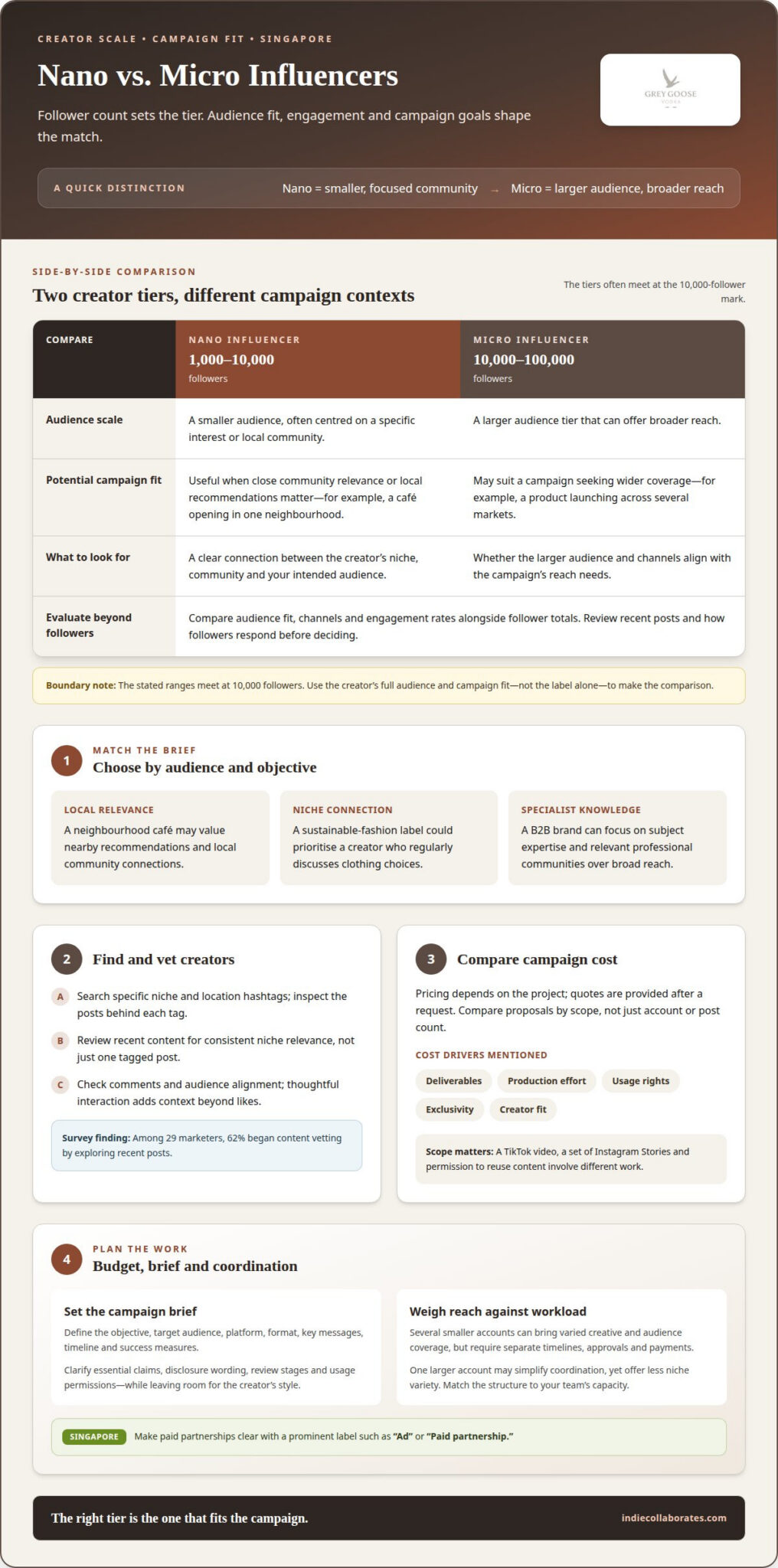
Nano creators generally have 1,000-10,000 followers, while micro creators span 10,000-100,000. For Singapore campaigns, make paid partnerships clear with a prominent label such as “Ad” or “Paid partnership.”
Nano and Micro Influencer Differences
A nano influencer serves a smaller audience than a micro influencer, with the tiers often meeting at 10,000 followers. That distinction matters when a campaign needs either close community relevance or broader reach. For example, a Singapore café opening in one neighbourhood may value local recommendations, while a product launching across several markets may need wider coverage. Compare audience fit, channels, and engagement rates alongside follower totals.
Benefits of Nano Influencer Partnerships
Nano partnerships connect brands with creators whose content often focuses on a defined interest or community. Their recommendations can feel personal because followers may share that interest or location. For a sustainable-fashion label in Singapore, a creator who regularly discusses clothing choices could be a more relevant match than a general lifestyle account. Multiple partnerships can bring varied creative perspectives, while a longer collaboration gives a creator room to tell a consistent brand story.
Discovery tools can make searches for similar accounts more focused. Paste a creator’s profile link into a search tool, then review suggested accounts for overlapping topics, audiences and content styles. Treat similarity as a starting point, not a final selection: open recent posts, assess how followers respond and check whether the creator’s audience matches your campaign. This helps distinguish genuine alignment from a profile that merely looks similar.
B2B brands can apply the same approach to specialist communities. A software company, for instance, could look for creators who explain workplace tools, procurement, or industry workflows on professional channels. Prioritise subject knowledge and audience relevance over broad reach. Then agree on deliverables, disclosure wording, and how campaign performance will be assessed before publishing. Those steps make smaller creator partnerships easier to evaluate against a specific business objective.
Creator pricing and campaign affordability
Creator campaign pricing depends on the project and is provided after a quote request. Key cost drivers include deliverables, production effort, usage rights, exclusivity and creator fit. A TikTok video, a set of Instagram Stories and permission to reuse content involve different work. Compare proposals by scope, not just by the number of accounts or posts.
Set a campaign budget around its objective before approaching creators. A product-awareness brief may prioritise several distinct audiences, while a sales-focused brief may favour trackable links and clear calls to action. Include the target audience, platform, required format, key messages, timeline and success measures. Clear requirements help creators estimate the work and identify where they can bring their own ideas.
Make the brief specific about essential claims and brand safeguards, while leaving room for creative freedom. For example, a TikTok creator can explain a product in their established style while following agreed facts and disclosure wording. Overly scripted content can weaken authenticity; a brief without clear boundaries can miss the campaign objective. Agree on review stages and usage permissions before production begins.
Affordability is not simply a low fee divided by expected reach. Assess audience relevance, engagement, content quality and the work involved in coordinating partnerships. A group of smaller accounts can offer varied creative and audience coverage, but managing separate timelines, approvals and payments takes time. A single larger account may simplify coordination, yet provide less niche variety. Match the structure to your team’s capacity.
Nano partnerships suit campaigns that value specific communities, local relevance, or several creative approaches. They may be a poor fit when the brief depends on broad reach from one post or complex production that requires substantial resources. Compare the likely audience fit with coordination needs, then define how results will be evaluated. Thoughtful creator campaign planning helps connect budget decisions to the campaign’s purpose.
Finding creators by niche, hashtags, and demographics
Start with the audience you want to reach, then define relevant interests, location and platform. A Singapore café, for example, might look for creators posting about neighbourhood food, independent cafés or local dining. These criteria focus discovery on genuine brand fit rather than accounts that merely use popular hashtags.
Search social platforms with specific niche and location hashtags, then compare the posts behind each tag. A broad food hashtag may surface many unrelated accounts, while a neighbourhood or cuisine-specific tag can reveal creators with closer community relevance. Check whether recent content consistently reflects the niche instead of relying on a single tagged post.
Evaluate each creator’s recent work, audience, and engagement together. In a survey of 29 marketers, 62% began content vetting by exploring recent posts. For a Singapore fitness brand, review whether a creator shares relevant routines, receives thoughtful comments, and speaks to an audience aligned with the campaign. Repeated, substantive interaction offers more context than likes alone.
To grow an audience and attract brand partnerships, publish focused content consistently, use relevant hashtags and respond to genuine questions. A creator discussing sustainable fashion, for instance, can build a clear portfolio through outfit explanations, material comparisons and practical care tips. A concise media kit showing audience demographics, engagement and past collaborations helps brands assess fit.
For outreach, identify brands whose products naturally connect with your content, then propose a specific collaboration. A local travel creator could suggest a neighbourhood itinerary featuring a suitable hospitality brand. Explain the audience match, content concept, platform, and intended deliverables in a brief message. Relevant proposals give brands a clearer reason to consider a partnership.
Before agreeing, align on the campaign objective, creative boundaries, timing, disclosure and content usage. For example, a skincare collaboration should distinguish required product information from the creator’s own experience. This balance protects factual clarity while leaving room for a genuine voice, helping both parties understand the work and intended audience.
What does nano-influencer mean?
A nano-influencer is generally a social media creator with 1,000 to 10,000 followers. Some industry definitions set the upper limit at 5,000, so the label can vary across platforms and campaigns. Treat the follower range as a practical category, not a universal rule. A creator’s content, audience, and activity help explain what that count means.
Country and follower-tier filters can help focus creator searches. For a Singapore campaign, select Singapore as the audience market, then narrow the follower range to match your brief. A creator’s location and the location of their followers are different details. Consider both: a creator based in Singapore may have an audience across several countries.
Follower count is a snapshot, not a measure of influence by itself. Compare the displayed count with recent posts, engagement, and audience relevance. For example, an Instagram creator with 4,800 followers may fit a niche campaign, but the number alone can’t show whether those followers are active or interested. Review comments for specific questions and genuine discussion, rather than relying only on likes.
Look for patterns across several posts before assessing an account. A creator who regularly shares content about Singapore home cooking may suit a local food brand better than an account with a larger but unrelated audience. Check whether comments reflect real conversation, whether the creator responds and whether recent posts connect with the campaign topic. These signals add context to follower counts.
Because definitions differ, compare creators using the same criteria instead of relying on the nano label alone. Record each account’s follower count, audience market, niche, recent activity, and engagement in a shortlist. That makes comparisons clearer when one creator has 2,000 followers and another has 8,000, but both appear relevant to your brief.
Refine your creator search by defining the audience and follower tier that fit your campaign.
If your brand lives on TikTok, these creators are worth a look for travel and food campaigns:
- @livingsmalltravels: travel tips, foodie finds and packing hacks.
- @msyuliantiyou: café hopping and dining, with fun transitions in her travel content.
- @shannonhojw: known for finding hidden gems; one fast-paced travel clip passed 64.7K views.
- @joccopie: POV-style clips and trendy edits; one travel recap reached 980K plays.
Indie Collaborates: Influencer Marketing Campaigns
Indie Collaborates helps brands turn creator discovery into structured influencer campaigns. If you’ve identified a niche and audience but need support aligning creators, content and campaign goals, its Influencer Marketing Campaigns bring those pieces together. Creator matchmaking helps brands find relevant partners for their campaign objectives.
For campaigns that need creator-made assets, Scalable UGC Production supports content creation, while Creator Content Strategy helps shape how that content serves your objectives. Affiliate Programmes are another option when you want creator partnerships connected to sales activity. Campaign Performance Reporting helps you assess campaign performance against your goals.
Choose support that matches your next step, whether you’re planning a campaign, producing content or developing an affiliate programme. Contact Indie Collaborates to discuss your creator campaign needs, or visit indiecollaborates.com.
Make your next creator campaign intentional
A strong #nanoinfluencer campaign starts with a clear decision: what should the creator help your audience understand, feel or do? Turn that goal into a focused brief, then leave room for the creator’s own perspective. This gives the partnership direction without making every post sound identical. Decide how you’ll assess the work before launch, so your team can learn from audience response and shape future collaborations with greater purpose.
If you’re ready to move from creator research to a campaign plan, bring your objectives and audience priorities into the conversation. Indie Collaborates can help you consider the right next step for your creator marketing needs. Contact Indie Collaborates to discuss your campaign, and take the next step with a clear brief and an open mind.
Frequently Asked Questions
Why should you collab with a brand?
A brand collaboration can help a creator develop portfolio work, reach new audiences and earn from relevant content. For example, a home-cooking creator might partner with a kitchenware brand whose products fit their recipes. Before agreeing, align on the brief, content format, timeline, compensation and permission to reuse the content. A partnership works best when the product suits your audience and the terms are clear.
What is a nanoinfluencer?
A #nanoinfluencer is a creator whose influence is associated with a smaller social media following, often within a focused interest or community. The label describes a follower tier, not a guarantee of audience quality or campaign results. For instance, a book reviewer may have a highly specific readership. Brands should assess the creator’s subject matter and audience alignment alongside the category label.
How many followers does a nanoinfluencer typically have?
The commonly used range is 1,000 to 10,000 followers, although some definitions place the upper limit at 5,000. This variation means two platforms or campaign tools may classify the same account differently. If an account sits near a tier boundary, compare its audience and recent activity rather than treating the label as a strict measure of its suitability.
What are the benefits and drawbacks of working with nanoinfluencers?
They can offer access to a focused community and a personal creator voice, which can suit products that need explanation or local context. The trade-off is coordination: working with separate creators means managing individual briefs, approvals, schedules and payments. A niche launch may benefit from several distinct perspectives, while a campaign that needs one coordinated, broad-reach moment may be harder to execute through many small accounts.
How much do nanoinfluencers charge for sponsored posts in Singapore?
Sponsored-post fees in Singapore vary with the platform, content format, production effort, creator-audience fit and usage rights. A simple post and a video that a brand wants to reuse in advertising involve different deliverables. Agree on compensation, revisions, exclusivity and content licensing before work begins. These terms clarify the full scope, instead of comparing fees without considering what each partnership includes.
How do brands find and evaluate nanoinfluencers in Singapore?
Start by defining the Singapore audience, campaign objective and relevant creator niche. Search platform keywords and hashtags, then review recent posts, audience comments and the creator’s consistency. Check whether the audience is in Singapore, since a creator’s location alone doesn’t establish where followers live. Shortlist accounts using the same criteria, then assess content quality and agree on a clear brief before confirming a collaboration.
