
A UGC campaign can do more than ask customers to post. UGC content for brand campaigns can turn customer photos, videos, reviews and stories into social proof, creative assets and practical product guidance. With permission, brands can also share organic posts with wider audiences while respecting creators’ ownership of their content.
Customer perspectives can make a campaign feel grounded in real experiences. But collecting content is only part of the work. Start with a clear objective and a suitable prompt, then get permission before reusing each asset.
This guide covers campaign ideas, explains how UGC differs from influencer marketing, and shows how to collect and amplify customer content responsibly. It also explores how to connect a campaign to a goal, from building community to helping shoppers understand how a product fits into everyday life.
Key Takeaways
- Choose a campaign format that fits your goal, from customer prompts and branded hashtags to paid creator content.
- Decide whether you need content for your brand’s channels or a creator’s audience; that distinction helps shape the campaign.
- Use real customer perspectives to build connection, and pay attention to the questions and experiences they share.
- Get permission before reusing organic posts, then align the content and its placement with your campaign objective.
What Are Some User-Generated Content Campaign Ideas?
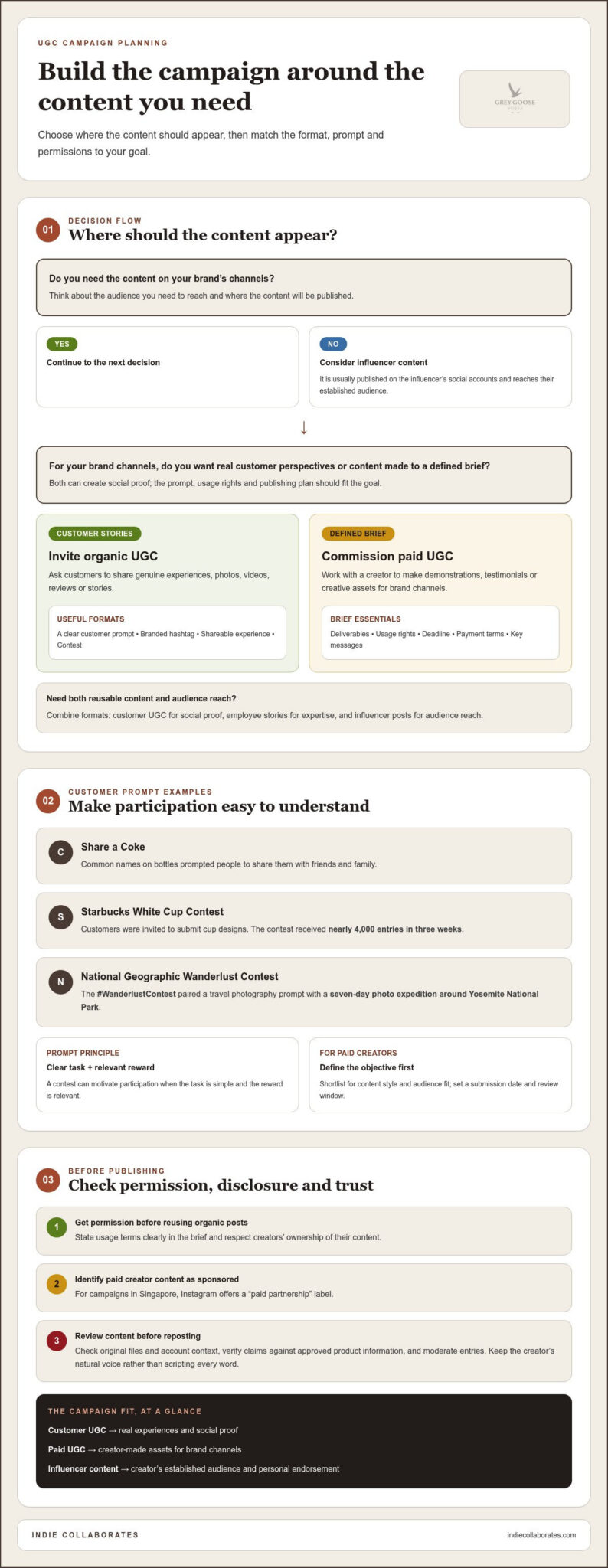
Customer-led campaigns invite people to share real experiences; paid creator campaigns commission content to a defined brief. Both can build social proof, but the prompt, usage rights and publishing plan should match the goal. For UGC content for brand campaigns, first decide whether you need customer stories, product demonstrations or assets for paid advertising.
Invite customers to participate with a clear prompt, a branded hashtag or a shareable experience. Coca-Cola’s Share a Coke put common names on bottles, prompting people to share them with friends and family. A branded challenge could invite customers to post Instagram photos or stories showing how they use a product. Feature selected posts only after getting permission.
Situation: Starbucks wanted customers to engage creatively with its cups. Action: Its White Cup Contest invited customers to submit cup designs. Result: It received nearly 4,000 entries in three weeks. A contest can motivate participation when the task is simple and the reward is relevant.
Situation: National Geographic sought travel photography. Action: Its Wanderlust Contest used #WanderlustContest and offered a seven-day photo expedition around Yosemite National Park. Result: The campaign paired a specific creative prompt with a distinctive experience.
For paid creator campaigns, define the audience and objective before searching for creators. Shortlist based on content style and audience fit, then send a concise outreach message covering the brief, deliverables, usage rights, deadline and payment terms. Agree on a submission date and review window. Specify key messages and required details, but leave room for the creator’s natural voice and storytelling.
For campaigns in Singapore, distinguish paid creator content from organic posts. Identify paid UGC as sponsored; Instagram offers a “paid partnership” label. Get permission before reusing customer posts, and state the usage terms clearly in the brief.
Fake submissions or unsuitable content can undermine trust. Review original files and account context, check claims against approved product information, and moderate entries before reposting. These steps support brand safety without scripting every creator’s words.
What’s the difference between a UGC campaign and influencer marketing?
The key difference is where the content appears and whose audience it reaches. Paid UGC typically appears on a brand’s channels, while influencer content is usually posted on the influencer’s social accounts. UGC can provide customer-style demonstrations, testimonials and creative assets. Influencer marketing adds the creator’s established audience and personal endorsement. Brands can combine the two when they need both reusable content and reach.
Employee-generated content is another distinct format. Staff might explain how a service works or share behind-the-scenes knowledge, while customers offer an outside perspective. Each serves a different purpose: a customer story can address a buyer’s practical concern, while an employee video can clarify a process. Repurpose approved stories across Instagram, product pages, email and paid ads, adapting each asset to the channel.
For campaigns in Singapore, choose platforms your intended audience uses, then match the format to the message. Short-form video suits demonstrations and creator storytelling; photos and written testimonials can support product pages and social posts. Instagram and TikTok can help with visual discovery, but the right platform depends on your audience, objective and content style.
Situation: A shopper needs reassurance before buying. Action: A brand features customer reviews and usage examples beside relevant products. Result: The content can address real questions at the point of consideration. Shoppers who engage with user-generated content reviews convert 144% more often.
To assess ROI, compare outcomes with costs. Track clicks, conversions and revenue alongside production or platform expenses, using measures that match the campaign objective. A marketplace may simplify creator discovery, briefing and asset delivery, while direct sourcing involves a different workflow. Before choosing, compare platform pricing structures, licensing options, reporting tools and the time needed to manage creators.
In a blended plan, give each format a specific role: customer UGC for social proof, employee stories for expertise, and influencer posts for audience reach. Clear tracking links and campaign performance reporting help show which assets contribute to the intended result.
Authenticity, community, trust, and purchasing influence
Authenticity comes from recognisable experiences, not polished claims alone. A customer showing how a product fits into daily life can answer practical questions through videos, images and specific details. A genuine challenge or learning moment can make the story more relatable. Keep the creator’s voice and avoid editing out the context that makes the content credible.
Consumer trust matters at the point of choice. 79% of consumers say user-generated content affects purchasing decisions more than traditional ads, while 88% trust other users’ recommendations more than branded advertisements. These figures underline why testimonials and firsthand accounts can support consideration. They don’t replace clear product information; pair a personal story with accurate details so viewers can assess both the experience and the offer.
Travel campaigns depend on place, perspective and lived experience. Situation: Airbnb wanted travellers to share experiences beyond standard accommodation images. Action: The brand encouraged guests and hosts to post with #AirbnbExperiences. Result: The hashtag has appeared in over 250,000 Instagram posts. For a Singapore travel brand, invite contributors to show a meaningful moment, such as a neighbourhood discovery, rather than prescribe a perfect itinerary.
Community grows when brands respond to the people who contribute. Glossier has used customer comments and unboxing photos to inform packaging decisions and campaign assets. That creates a feedback loop: invite stories, identify recurring needs, then show how customer input informs communication or decisions. Nike’s 2025 #MambaDay campaign connected more than 200 athletes and millions of fans through personal stories about Kobe Bryant’s “Mamba Mentality.” The shared theme gave individual voices a common purpose.
Track engagement across channels, but judge trust through the quality of responses too. Look for relevant questions, thoughtful comments and repeat participation, not just views. About 60% of consumers say UGC is the most authentic way for brands to market themselves. Consistent moderation, transparent sponsorship disclosures and respectful replies help keep that authenticity intact.
Amplifying organic content with permission
A hashtag can help surface customer photos, but finding a post doesn’t grant reuse rights. Treat permission as a separate step in your amplification plan. Identify the creator, link to the original post, explain where the content may appear, and get clear approval before reposting or adapting it. Specify the channels, paid or organic use, editing and permission period. Credit is courteous, but it does not replace permission.
Situation: Apple wanted to showcase photographs made with its phones. Action: Its #ShotoniPhone campaign encouraged people to share images under a branded hashtag. Result: It generated over 6 million user-generated Instagram posts. The example shows how a simple prompt can help a brand discover relevant organic content. Each selected image still needs its own permission process before reuse.
Make the approval request easy to understand. Identify the specific post and intended use, such as an Instagram feature, website gallery or paid advertisement. Keep the creator’s response with the asset, including the approved channels and terms. If your team later wants to crop a photo or use it in a new placement, get permission for that use too.
Before publishing, check that the post fits the campaign and makes no unsupported product claims. Review captions and comments for context: a photo can seem to endorse something the creator never said. Keep a record of the original post, approval and credit details. A shared asset library helps teams find approved examples and avoid using content beyond its agreed scope.
Amplification also means giving creators a clear way to respond. Acknowledge their contribution, follow agreed credit preferences, and remove or pause content if permission changes. The New Zealand National Cricket team regularly displays fan posts, tweets and videos on its media feed, demonstrating how audience contributions can become part of a brand’s ongoing storytelling.
Build a repeatable permission-first process before your next campaign. Plan your organic content amplification strategy around clear rights, placements and creator credit.
Indie Collaborates: Influencer Marketing Campaigns
Indie Collaborates turns campaign goals into coordinated creator activity through Influencer Marketing Campaigns and Scalable UGC Production. Choose Influencer Marketing Campaigns to reach creators’ audiences; choose UGC production for creator-led assets for brand channels, paid ads or creative testing.
Creator Content Strategy can shape the brief, content direction and creator fit, while Campaign Performance Reporting helps teams assess results against campaign objectives. Affiliate Programmes can connect creator activity with sales outcomes. These services suit teams looking to source content, coordinate creators or learn from campaign performance through a structured approach.
Contact Indie Collaborates to discuss your creator campaign or UGC production brief.
Turn your next campaign into a clear creative brief
Choose one audience need for your next campaign, then build the creative plan around it. UGC content for brand campaigns might help shoppers understand how a product works, give customers a reason to share their experiences, or test different creator-led approaches. A focused objective makes it easier to choose formats, agree on usage rights and assess performance.
Indie Collaborates offers Influencer Marketing Campaigns, Scalable UGC Production and Affiliate Programmes, giving brands different ways to connect creator activity with campaign goals. The right fit depends on whether you need audience reach, reusable creative assets or a creator-led sales programme.
Bring your objective, audience and initial idea into the next conversation. Explore a UGC campaign with Indie Collaborates and take the next step with a clearer creative direction.
Frequently Asked Questions
What are UGC campaigns used for?
UGC campaigns help brands explain products, test creative directions and learn what customers find useful. For example, a homeware brand could invite buyers to show how they organise a small kitchen, then review recurring questions to guide future product education. The content can serve as both audience-facing material and a feedback signal, as long as personal opinions are kept distinct from verified product claims.
How Can Teams Scale UGC With Creator Marketing Technology?
Creator marketing technology can help teams organise discovery, briefs, approvals, rights records and performance reporting in one workflow. Tag assets by product, audience, format and campaign objective so teams can find relevant material later. Automation can support creator shortlisting and administration, while marketers judge relevance and brand fit and make the final selection.
How Do You Brief Creators Without Flattening Their Voice?
Separate essential guardrails from creative choices. State the audience, campaign objective, factual claims and required deliverables, then let the creator choose their setting, phrasing and storytelling approach. For a kitchen appliance demonstration, the brief might require showing a specific function but leave the creator free to choose the recipe and filming style. Give feedback against agreed requirements rather than personal preferences.
How do UGC campaigns handle rights, ads and measurement?
Document permission before publication, including the approved asset, placements, usage period and whether paid promotion is included. Keep the approval with the original file so teams can check each asset’s terms. For sponsored creator posts, use the platform’s disclosure tools and clearly identify the content as an ad. Measure against the campaign goal, using tagged links for traffic or sales objectives and completion data for video-viewing goals.
How much creative control should a brand give creators?
Stay in control of accuracy, safety and essential campaign requirements while giving creators room to shape the delivery. A brand can approve product claims and required disclosures while letting a creator use their own examples, tone and editing style. If a draft misses a required fact, give precise, limited feedback. Rewriting every line can make a personal recommendation sound like a scripted advertisement.
Is UGC still worth it in 2026?
UGC can remain useful in 2026 when it solves a defined marketing need and the team can manage quality, rights and measurement. Start with a focused test, such as comparing customer demonstrations with studio creative on the same product page. Review audience response and the campaign’s chosen KPI, then refine the prompt or format. The value comes from fit and learning, not simply producing more assets.
